
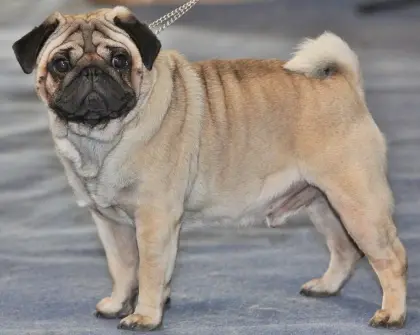
Pug
A wrinkly, comedic lap dog that loves people but struggles in the heat.
Image source: Wikimedia Commons — https://en.wikipedia.org/wiki/Pug
Behavior traits
Scores from 1 to 5 reflect breed averages; every animal has its own personality.
The Pug is a breed of dog with the physically distinctive features of a wrinkly, short-muzzled face, and curled tail. Pugs have a coat that is fine, smooth, soft, short, and glossy, coming in a variety of colors, most often fawn or black, and a compact, square body with well developed and thick muscles all over the body.
General care guide: Dogs
Before you bring a dog home
A dog is a 10–15 year commitment. Match the breed to your space, schedule and budget, not just its looks.
Feeding
Puppies eat 3–4 meals a day, adults two. Use a quality food with meat as the first ingredient. Never feed chocolate, grapes, onions, garlic, xylitol or cooked bones.
Vaccines & health
Core vaccines start at 6–8 weeks with yearly boosters; rabies from 12 weeks is essential in Iran. Deworm every three months and protect against fleas and ticks.
Training & exercise
Reward-based training works best. Socialise puppies between 3 and 14 weeks. Most dogs need at least two walks a day; working breeds need much more.
Frequently asked questions
How long does a Pug live?
A Pug typically lives about 12-15 years, and good nutrition and regular checkups can extend that.
Is a Pug good for apartments?
Yes — with enough daily activity, a Pug adapts well to apartment life.
Is a Pug good with children?
Yes — a Pug is usually gentle and patient with kids, though play should always be supervised.