
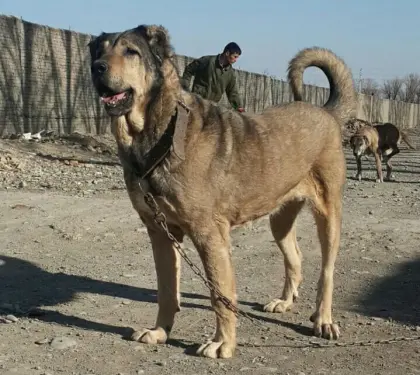
Sarabi Mastiff
Iran’s native livestock guardian from Sarab, prized for its size and courage against wolves.
Image source: Wikimedia Commons — https://fa.wikipedia.org/wiki/%D8%B3%DA%AF_%D8%B3%D8%B1%D8%A7%D8%A8%DB%8C
Behavior traits
Scores from 1 to 5 reflect breed averages; every animal has its own personality.
The Sarabi dog or Iranian mastiff is a large breed of livestock guardian dog named after and originating from the Sarab County in Iran. Sarabi dogs have been used for centuries to protect herds from Syrian brown bear, Indian wolf, golden jackal, striped hyena, Persian leopard the largest leopard subspecies, and the extinct Caspian tiger. The Sarabi mastiff is calm, controlled, independent, powerful and protective; the breed is also used to compete in staged dog fights and as a hunting dog. The breed is considered one of the oldest and most powerful indigenous dog breeds in Iran; the larger and heavier an individual dog is, the greater its value.
General care guide: Dogs
Before you bring a dog home
A dog is a 10–15 year commitment. Match the breed to your space, schedule and budget, not just its looks.
Feeding
Puppies eat 3–4 meals a day, adults two. Use a quality food with meat as the first ingredient. Never feed chocolate, grapes, onions, garlic, xylitol or cooked bones.
Vaccines & health
Core vaccines start at 6–8 weeks with yearly boosters; rabies from 12 weeks is essential in Iran. Deworm every three months and protect against fleas and ticks.
Training & exercise
Reward-based training works best. Socialise puppies between 3 and 14 weeks. Most dogs need at least two walks a day; working breeds need much more.
Frequently asked questions
How long does a Sarabi Mastiff live?
A Sarabi Mastiff typically lives about 10-12 years, and good nutrition and regular checkups can extend that.
Is a Sarabi Mastiff good for apartments?
A Sarabi Mastiff needs more space and lots of exercise; a small apartment isn’t ideal.
Is a Sarabi Mastiff good with children?
A Sarabi Mastiff needs extra training and supervision in homes with young children.